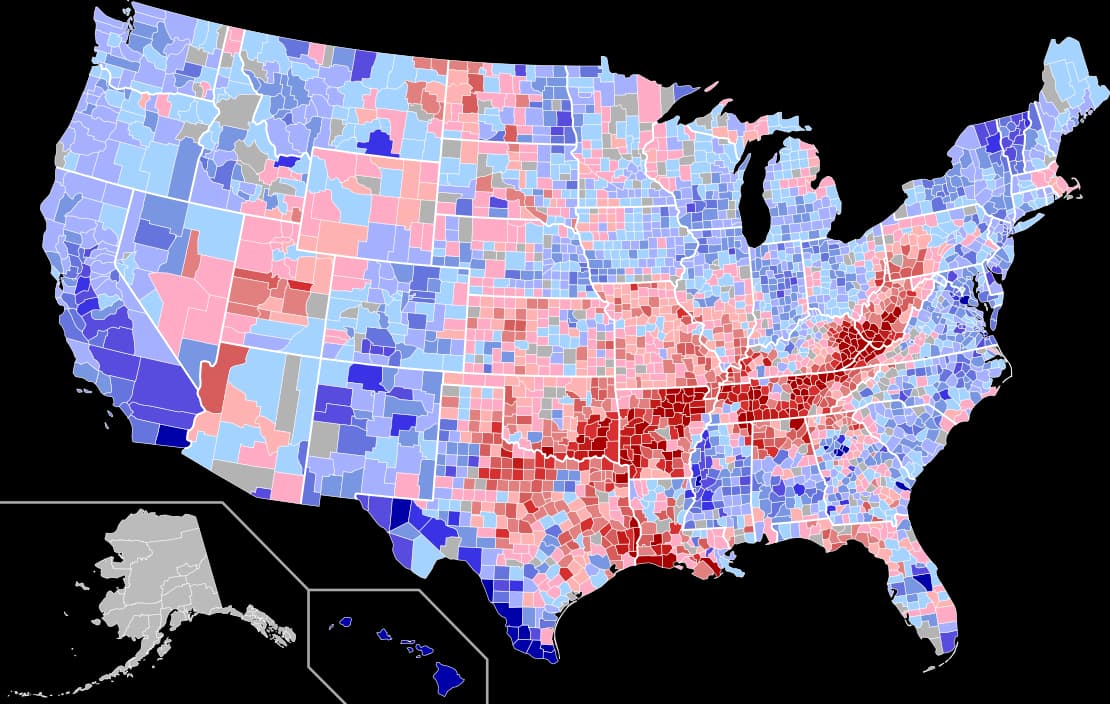
My mission and purpose are to help people understand the world and make better decisions. I do this through clear, concise, and meaningful presentations of data and analysis.
I build AI systems and I measure whether they work. A Ph.D. in political science taught me causal inference and survey methodology; three years at Moody's Analytics taught me how to ship generative AI that enterprise clients depend on. Today I run HumanAI Ventures.
- 3 min
- Moody's credit-risk workflows that used to take three days
- 10 min
- Survey analysis at Survey Fluency, down from 25 hours
- 20+
- Enterprise clients using the AI agents I shipped
- 13M
- Campaign-finance records organised for published research
Experience
2026 – present

Adjunct Assistant Professor
- Designs and teaches POL 196E: research design, causal inference, measurement and data visualisation in R
- Mentors undergraduates through to the UCCS Undergraduate Research Showcase
R · ggplot2 · research design
2025 – present

Founder & CEO
HumanAI Ventures
- Survey Fluency: an AI survey-analysis platform that collapses a 25-hour workflow to about 10 minutes
- Delphic Polling, a political data and polling consultancy
- Berkeley SkyDeck Pad-13
LangChain · LangGraph · GCP · Docker · FastAPI · Supabase
2023 – 2025

Assistant Director of Research, AI Product Development
Moody's Analytics
- Led generative-AI product development for the Commercial Mortgage Metrics platform
- Shipped the Run CMM, CMM Reporting and Red Flag agents
- Turned three-day analyst workflows into three-minute ones for 20+ enterprise clients
LLM agents · evals · product
2016 – 2023

Ph.D. Researcher, Political Science
University of California, Davis
- Organised 13 million campaign-finance records and county returns from 1872 to 2020
- Difference-in-differences, regression discontinuity and matching designs across published research
- Fielded two nationally representative surveys (N = 2,300 and N = 4,300)
Concurrently Graduate Student Researcher at UC Center Sacramento, 2021–2023.
R · Qualtrics · SQL
2011 – 2014
Congressional Intern
U.S. Congress
- Offices of Rep. Michelle Lujan Grisham and Sen. Martin Heinrich
Skills & Tools

R
Proficient

Python
Intermediate

Qualtrics
Familiar

SQL
Proficient
GenAI & Agents
- LangChain and LangGraph
- Multi-agent orchestration
- RAG and retrieval
- Evals and guardrails
- OpenAI and Anthropic APIs
- Prompt and context design
- Model Context Protocol
Cloud & Engineering
- Google Cloud Run
- Docker
- FastAPI
- Supabase and Postgres
- Streamlit and Shiny
- Git, GitHub and CI/CD
Statistics & Causal Inference
- OLS, MLE and GLM
- Difference-in-differences
- Regression discontinuity
- Matching estimators
- Machine learning, random forests
- Measurement and scaling
- Duration modelling
Research Methods
- Survey methodology, two national samples via Lucid
- Experiments: conjoint and A/B
- Social network analysis
- Text and sentiment analysis
- Web scraping at scale
- Database construction — published research
What can I do for you?
Data
- Data Collection:
- Compiled presidential, senatorial, and gubernatorial county-level election returns from 1872 to 2020.
- Survey Administration:
- Created, administered, collected, and cleaned data from two surveys through Qualtrics on political partisanship (N = 2.3K) and COVID-19 (N = 4.3K).
- Big Data:
- Organized and aggregated campaign finance contributions records from 13 million records.
- Webscraping:
- Webscraped data on California ballot proposition campaigns, state legislators, election data, news articles from LexisNexis, and party coalitions online.
Analysis
- Statistical Modeling:
- With a Ph.D. in political science, I use OLS and MLE tools daily. I also have experience creating machine learning models.
- Causal Inference:
- In published research, I used a difference-in-difference design to investigate whether making voting by mail easier increased turnout and affected presidential vote shares in the 2020 election. In my dissertation, I leverage redistricting as an exogenous shock to analyze the causal effects of money on House members' behavior.
- Social Network Analysis:
- In graduate school, I examined U.S. House cosponsorship networks and campaign finance networks as a multiplex network. In the Washington Post, I present descriptive evidence on egocentric COVID-19 vaccine discussion networks.
Reporting
- Data Visualization:
- I am proficient in ggplot2, where I can make histograms, scatterplots, maps, and pretty much anything else.
- Communication:
- I am published in academic journals and The Washington Post. I have also presented quantitative research at UC Davis, and at national political science conferences.
- Teaching:
- I was twice asked to be the R mentor for undergraduate honors students. I have served a section instructor for undergraduate research methodology classes, and I have taught five R workshops at the UC Center in Sacramento.
Selected Writing
Peer-reviewed
- Kiesel, Spencer & Sharif Amlani (2025). “Affective Polarization in a Word: Open-Ended and Self-Coded Evaluations of Partisan Affect.” PLOS ONE 20(1): e0310772.
- Amlani, Sharif, Spencer Kiesel & Ross Butters (2023). “Polarization in COVID-19 Vaccine Discussion Networks.” American Politics Research.
- Amlani, Sharif & Samuel Collitt (2022). “The Impact of Vote-By-Mail Policy on Turnout and Vote Share in the 2020 Election.” Election Law Journal.
- Amlani, Sharif & Carlos Algara (2021). “Partisanship & Nationalization in American Elections.” Electoral Studies 73: 102387.
Public writing & policy
- Amlani, Sharif & Spencer Kiesel. “How much do vaccinated Americans dislike the unvaccinated? We measured.” Washington Post, January 27, 2022.
- Amlani, Sharif, Ross Butters & Spencer Kiesel. “What's keeping people from getting vaccinated? Their own social circles.” Washington Post, December 14, 2021.
- Rocca, Michael, Sharif Amlani, Lisa Sanchez & Julia Hellwege (2015). “Crony Capitalism, Corruption and the Economy in the State of New Mexico.” Thornburg Foundation.
- Amlani, Sharif (2015). “Cosponsorship in Congress: Does the Number Matter?” The Journal of Politics and International Affairs 9.1: 120–139.
Why take a chance on me?
- Integrity:
- I believe in holding myself and those around me to the highest professional standard because if people cannot trust you, how can they trust the work you do?
- Empathy:
- I believe it is important to see the world from other individuals’ perspectives. Doing so builds bridges between people and helps better understand the motivations behind their behavior.
- Optimism:
- I believe every great leader is endowed with optimism, the belief that, while challenges will arise, we have the capacity to overcome them through focus and determination.
- Work Hard:
- Every successful individual knows how to work hard. I will bring the same focus, determination, and effort that it took to work in Congress and get a Ph.D. to your organization.
- Collaborate Meaningfully:
- As someone who has collaborated on teaching, news articles, and academic journal articles, I will enjoy working with talented and motivated individuals at your organization to produce products we can be proud of.
- Keep Growing:
- As a lifelong student, I believe in a growth mindset where we can always learn something new and improve on what we can do now.
- Help At Every Opportunity:
- It doesn’t matter where or when, but at some point, we all need a helping hand. I believe in helping people on challenges big and small.
- Empower Those Around Me:
- To get the best out of people I believe in supporting them, empowering them to take chances, and fostering creativity.
- Pay It Forward:
- No one is successful on their own. I believe in giving to the next group, what so many have given to me.